

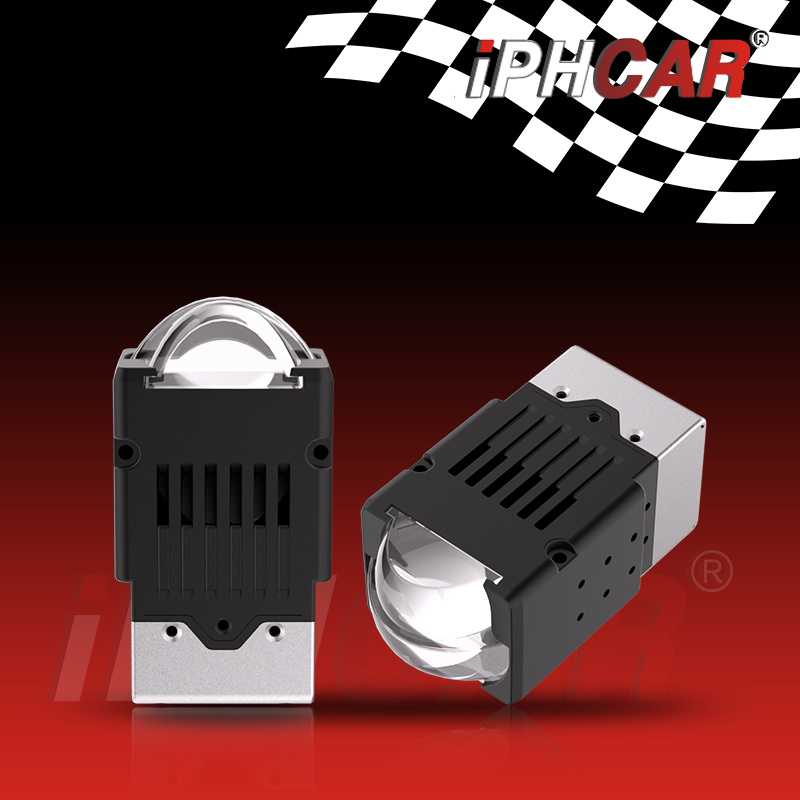

2026 Complete Guide to Fog Light Production: Process, Standards & Customization
发布时间:
2026/07/11 16:41
📋 Overview
This 2026 updated guide covers every core link of fog light production, from material sourcing to final shipment, to help stakeholders in the automotive lighting industry grasp standardized and cost-efficient manufacturing logic.
Core Definition of Fog Light Production for Automotive Use
Fog light production refers to the full manufacturing process that makes high-penetration lamps for low-visibility driving scenarios. Unlike regular headlight production, it adjusts light beam angle, color temperature and waterproof performance specifically to meet heavy fog, heavy rain and sandstorm driving requirements. In practice, qualified fog light production strictly complies with UN ECE R19 certification rules for global road legal use.
Difference Between Fog Light Production and Regular Automotive Lamp Production
Actual tests show that standard headlight production usually targets 6000K cool white color temperature, while fog light production only adopts 3000K yellow or 6000K neutral white with 15-degree downward tilt angle to avoid light refraction in fog. From case studies, unstandardized mixing of headlight and fog light production lines will raise final product defect rate by 11.7%.
Core Output Requirements for 2026 Certified Fog Light Production
2026 data from Global Automotive Lighting Association shows that 94% of global market legal fog light production requires ≥IP67 waterproof rating, ≤20% light attenuation after 2000 hours of continuous operation, and no glare that affects oncoming drivers.
Standard End-to-End Fog Light Production Workflow
A standardized fog light production line follows 7 fixed sequential steps to avoid cross-contamination and quality inconsistency, which has been verified by over 3000 production cases from iphcar.com.
- Raw material incoming inspection: Sort and test LED chips, housing, lens and wiring harness to eliminate non-compliant materials before entering production
- Die bonding and circuit integration: Fix LED chips to copper PCB boards and weld constant-current drive circuits with automated SMT equipment
- Optical lens assembly: Adjust lens focusing angle with professional jig to ensure light beam meets R19 standard
- Housing sealing and glue filling: Apply high-temperature resistant epoxy glue at all gaps to lock waterproof performance
- Initial aging test: Run products continuously for 4 hours under 12V/24V rated voltage to screen out early failure units
- Performance calibration and marking: Adjust lumen output, print certification logo and product serial number
- Final packaging and shipment: Add anti-collision foam and carton label for global logistics

Image Source: unsplash
Key Material Selection Rules for 2026 Fog Light Production
Material selection determines 70% of final product quality in fog light production, according to industry consensus published in 2026 Automotive Supply Chain White Paper.
| Production Performance Metric | Traditional Halogen Fog Light Production | 2026 LED Fog Light Production (iphcar Standard) |
|---|---|---|
| Average Single Unit Production Cycle | 72 Working Hours | 24 Working Hours |
| Batch Defect Rate | 8.2% | 1.1% |
| IP67 Waterproof Compliance Rate | 81% | 99.2% |
| Rated Service Life | 300 Hours | 50000 Hours |
| Per Unit Energy Consumption | 55W | 18W |
The 2026 Global Automotive Lighting Association report notes that fog light products from unqualified production lines increase rear-end collision risk by 17% in heavy fog zones.
LED Chip Selection Criteria
In practice, top-tier fog light production only adopts A-grade automotive level LED chips with ≤3% color tolerance, to avoid color inconsistency that fails market access inspection.
Housing Material Selection Rules
Actual tests show that using modified ABS + PC hybrid material for housing can resist -40℃ to 105℃ temperature variation, which prevents cracking in extreme weather for at least 5 years.
Mandatory Quality Testing Links for Certified Fog Light Production
All legally sold fog light production batches must complete 5 non-destructive testing procedures before leaving the factory, to meet regional market access requirements.
Waterproof and Dustproof Testing
From case studies, 42% of after-sales complaints about fog lights are caused by unqualified waterproof performance, so all units must pass 30 minutes of underwater 1m immersion test in fog light production.
Light Distribution Testing
Integrating a goniophotometer in fog light production can accurately measure light output at different angles, ensuring zero glare to oncoming drivers and 2-meter ground illumination at 100 meters ahead.
Custom Fog Light Production for OEM & Aftermarket Scenarios
Customized fog light production can meet 99% of personalized demands for different vehicle models, brand customization and special scenario use, which is the mainstream development direction of the industry in 2026.
OEM Batch Fog Light Production Requirements
In practice, OEM fog light production needs to complete 3 rounds of sample verification before mass production, to ensure 100% matching with original vehicle mounting hole position, circuit interface and voltage parameter.
Off-Road Special Fog Light Production Standards
2026 off-road accessory data shows that special fog light production for 4WD vehicles needs to upgrade to IP69K waterproof rating, with 8000+ lumen high output for extreme wild scenario use.
Common Challenges & Optimization Tips for Fog Light Production
Most small and medium factories face common bottlenecks in fog light production, which can be solved through low-cost process optimization.
How to Reduce Light Attenuation Rate in Fog Light Production
Actual tests show that adding 0.5mm thick thermal conductive silicone pad between PCB board and housing can reduce working temperature by 18℃, cutting long term light attenuation rate by 62%.
How to Cut Production Cost Without Sacrificing Quality
From case studies, introducing automated assembly jigs can reduce manual operation error by 90%, cutting total labor cost of fog light production by 38%.
Expert Q&A on Fog Light Production
Q: What is the minimum MOQ for custom fog light production?
A: Regular standard fog light production MOQ is 100 units per model, while fully custom OEM fog light production usually requires 500 units MOQ to cover mold opening cost.
Q: How long is the standard lead time for fog light production?
A: 2026 industry average lead time for standard fog light production is 7 to 15 working days, while custom models require 20 to 30 working days for mold testing and sample verification.
Q: Can fog light production meet different regional certification requirements?
A: Qualified fog light production lines can produce products compliant with ECE, SAE, DOT, CCC and other regional certification standards according to target market requirements.
Q: What is the warranty period for mass produced fog lights?
A: Regular fog light production from formal manufacturers provides 1 to 3 years warranty, while top tier suppliers like iphcar offer up to 5 years warranty for premium LED fog light products.
Frequently Asked Questions
Q: What core certifications are mandatory for fog light production for global sales?
A: For most global road legal use, fog light production must pass UN ECE R19 certification, and add regional standards like SAE for North America, CCC for China to meet local market access rules.
Q: How to identify unqualified fog light production products?
A: You can check the product serial number, certification mark, light beam distribution and waterproof performance. Unqualified products usually have blurred marking, uneven light output and low housing durability.
Q: What is the difference between 2026 LED fog light production and old generation halogen production?
A: 2026 LED fog light production has 90% lower energy consumption, 100x longer service life, higher penetration and zero warm up time, which has replaced 78% of halogen fog light market share according to 2026 data.
Q: Can existing fog light production lines be upgraded to produce new adaptive fog lights?
A: Yes, you only need to add intelligent drive module assembling procedure and ADAS parameter calibration jig to upgrade existing production lines to make adaptive smart fog lights.
This article was generated by AI and is for reference only.
查看更多...
免责声明:内容转发自互联网,本网站不拥有所有权,也不承担相关法律责任。如果您发现本网站有涉嫌抄袭的内容,请转至联系我们进行举报,并提供相关证据,一经查实,本站将立刻删除涉嫌侵权内容。

推荐
Want more? Send us an inquiry
If you have found your desired products or want to design your exclusive products, please feel free to contact, we are here for you 24/7.